

Radical Black Women
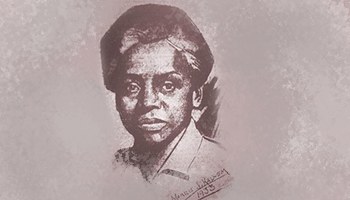
Williana Burroughs
Williana Burroughs was born on January 2nd, 1882 in Petersburg, Virginia. At age four her mother, an ex-slave, moved them to Manhattan shortly after the death of her father. Barely a generation removed from slavery Williana Burroughs would grow up to be a dedicated and highly effective Black communist woman. She would organize poor, Black, and immigrant communities in New York, run for public office on the Communist Party (CP) ticket, and spend almost 12 years of her life working in the Soviet Union. This phenomenal life, however, began in abject poverty.
While in New York, Williana’s mother worked as a cook and struggled to support her family. Eventually, Williana would be made to spend seven years in Harlem’s Colored Orphan Asylum and would not be reunited with her mother until age 11. Nevertheless, Williana excelled as a student and in 1902 she graduated from what is now Hunter College and began work as a public-school teacher. In 1909 she married Charles Burroughs, a postal worker. Burroughs was soon fired from her teaching job when New York Public Schools implemented a ban on employing married women. It was the loss of this job that would further radicalize her.
Frustrated and searching for ways to alleviate her people’s suffering Burroughs eventually joined the American Negro Labour Congress in 1926 and then became a local and national organizer for the Communist Party in 1927. Burroughs’ political activity would increase drastically with her membership in the Communist Party.
Under her party name, “Mary Adams,” Burroughs was an active contributing writer for left and Black publications such as The Daily Worker and Working Woman. She penned numerous articles tackling issues of education and racial discrimination. In 1928, Burroughs made her first four trips to the Soviet Union and in the summer of that was one of two Black Communists chosen to attend the Communist International’s (Comintern) Sixth Congress held in Moscow. She traveled to Moscow with her two children, ten-year-old Charles, and seven-year-old Neal. While in Moscow Burroughs was an active participant in the discussion on the Negro Question. She courageously took the CPUSA to task for its “underestimation” of women’s work and Black women’s issues. Standing before the Comintern as the first Black woman ever to address the Third International, Burroughs also criticized the US, French, and British communist parties for their shameful work on issues of race and anti-colonialism She argued that the CPUSA had failed to develop a practical plan for organizing the rural south and charged that it had only devoted a handful of effective organizers to other black communities. She also drew attention to the CP’s lack of providing resources to the ANLC and the absence of any Black communist in the Party’s leadership.
As a solution to these issues, Burroughs called for more resources for organizing Black communities and more Black communists in the CPUSA’s leadership. She also argued that a successful campaign to organize Black people would depend on organizing Black women, West Indian and African immigrants, youth, and the unemployed as well as building strong ties with anti-imperialist struggles in the Caribbean. Of the many resolutions adopted by the Sixth Congress including the Black Belt Nation Thesis, none incorporated Burroughs's attention to women in thinking about organizing Black people. Despite this disappointment, Burroughs' time in Moscow was not wasted as she became crucial in organizing key initiatives among Blacks in the Comintern.
When the Comintern’s Red International of Labor Unions took charge of organizing Black workers in the African Diaspora, Burroughs was key to developing its organizational rationale. In several reports, she outlined the specifics of discriminatory practices carried about by US trade unions that led to a decrease in union membership among Black people. She also worked alongside James Ford, William Patterson, Garan Koyaté, Jomo Kenyatta, and Frank Macaulay to define the basis for the International Trade Union Committee of Negro Workers a dynamic organization with an anti-imperialist, communist, and Pan-African focus. In preparation for the organization’s founding in Hamburg, Burroughs produced reports covering child labor, trade union organizing among Black women in the US and Caribbean, and the need for a party apparatus for Negro Women in the United States.
After her return from Moscow Burroughs became active in the leadership of the Harlem Tenants League (HTL) one of the crucial sites of Black communist women’s activism. The HTL was committed to facilitating Black people’s economic survival and alleviating Black women’s exploitation. They organized protests, rent strikes, stopped evictions, and demanded enforcement of housing regulations that protected tenants’ rights. Burroughs also served on the executive board of the League of Struggle for Negro Rights (LSNR) and led the group’s women’s division. She also worked on the editorial board of the group’s newspaper the Harlem Liberator and helped organize mass action around Scottsboro and housing issues. It was her work in LSNR that boosted Burroughs' reputation as an effective Communist.
Taking notice of Burroughs’ competence and popularity the Communist Party nominated her to run for Comptroller of New York City in 1933 and Lieutenant Governor of New York State in 1934. She was the running mate for gubernatorial candidate and CP organizer Israel Amter. Together they advanced a political platform that called for jobs and insurance for the unemployed, an anti-lynching bill, and the right for workers to form unions and demand higher wages. Though Burroughs and Amter did not win the election they received almost 31 000 votes the most any Communist candidate running for New York public office had ever received.
In June of 1933, Burroughs was fired from a teaching position for a second time. This time for “conduct unbecoming of a teacher” as she and a white colleague Isidore Begun marched into the New York City school board meeting to protest the horrible conditions of Harlem schools and the city’s failure to provide lunch to children of unemployed parents. In October 1935 Burroughs decided to go back to the Soviet Union and would not return to the United States for 10 years. During WWI Burroughs worked as the only English-speaking shortwave radio editor and announcer for Soviet State radio. She earned a commendation at the war’s end and became known as the “Voice of Moscow.” Nevertheless, as early as 1940 Burroughs wanted to return home and petitioned Soviet officials for leave but they would not allow it as she was the only competent English-speaking radio announcer they had. Her husband Charles became ill in 1941 and died while Williana remained in Moscow.
Burrough was finally able to go back to New York in 1945 however, she was in ill health. A couple of months after her return to the US on December 24th, 1945 she died. The national Black Press and the New York communist press reported her death and lamented the loss of a distinguished and dedicated Black communist woman. While the voice of Williana Burroughs would no longer be heard on the airwaves of Moscow or in the streets of Harlem, she left behind an incredible legacy of educating and advocating for the poor and jobless, raising Pan-African consciousness, building worker’s anti-imperialist institutions, and insisting on the importance of the Black woman’s role in the revolutionary reorganization of society.
Bibliography
Harris, Lashawn. "Running with the Reds: African American Women and the Communist Party during the Great Depression." The Journal of African American History 94, no. 1 (2009): 21-43. Accessed November 28, 2020. http://www.jstor.org/stable/25610047.
Makalani, Minkah. "An Apparatus for Negro Women: Black Women's Organizing, Communism, and the Institutional Spaces of Radical Pan-African Thought." Women, Gender, and Families of Color 4, no. 2 (2016): 250-73. doi:10.5406/womgenfamcol.4.2.0250.
McDuffie, Erik S. Sojourning for Freedom: Black Women, American Communism, and the Making of Black Left Feminism. Durham [NC]: Duke University Press, 2011.
Williana Burroughs. (2021, May 27). Wikipedia. https://en.wikipedia.org/wiki/Williana_Burroughs#/media/File:Burroughs-Williana-1933.jpg
Author: Khaleel Grant
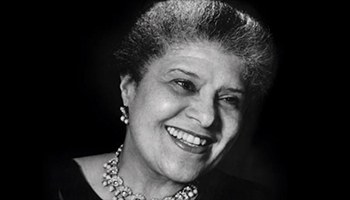
Eslanda Robeson
Situated in the midst of the burgeoning Civil Rights Movement in the United States, the Second World War, and anticolonial resistance in Asia, Africa and the Caribbean, Eslanda Goode Robeson (1895-1965) worked as a journalist, anthropologist and political organizer to connect the political struggles for independence and freedom for oppressed people of color globally. While she is often omitted in conversations about the Black internationalist and radical left tradition, her political contributions were invaluable to the enrichment of transnational relations and activism during the mid-20th century. Her passion for internationalism brought her all over the world, and through her travels she built lifelong connections with political figures who were also committed to fighting against white supremacy, capitalist exploitation and imperialism on a global scale. Robeson strongly believed that Black American solidarity with Third World movements could facilitate the creation of a new egalitarian world order.
Affectionately referred to as “Essie,” Eslanda Robeson was born to a middle-class family in Washington DC in 1895. Her grandfather was an elected official in South Carolina during the Reconstruction period who advocated for the rights to citizenship for formerly enslaved Black people, and her mother was a volunteer for the Black leftist and internationalist newspaper The Voice in the 1910s. Robeson later moved to New York City and graduated with a degree in Chemistry from Columbia University. She became the first Black person to be the head histological chemist of Surgical Pathology at New York-Presbyterian Hospital. After marrying activist and performer Paul Robeson in 1921, she became his manager and in the late 1920s, left her career in chemistry behind. Her position took her to Europe, and her time in cities like London and Paris transformed her politically.
In 1931, Robeson began to study anthropology at the London School of Economics. Her time as a student in London made her aware of the existence and plights of the larger African diaspora. Robeson’s anthropological work allowed her to travel throughout the continent of Africa, where she gained a deeper understanding of the diasporic connections between African people and Black Americans in the United States, publishing articles about her experiences in popular transnational Black publications like Amsterdam News and the Challenge. Additionally, she formed community with Black African and Caribbean people in London, which cultivated her internationalist lens towards the issues of white supremacy and economic exploitation. She was a member of the West African Student Union (WASU), a leftist and anticolonial organization founded in London in 1925. Her participation in WASU allowed Robeson to build friendships with other radical leftist intellectuals and anticolonial political leaders like George Padmore and C.L.R James from Trinidad, and Jawaharlal Nehru from India.
With the onset of World War II and the Cold War, the Black internationalist community came together to discuss how they would dismantle Western colonial rule. In 1941, Robeson and other Black political figures formed the Council on African Affairs (CAA) in the United States. Her husband, Paul Robeson, was the organization’s chairman. The mission of the organization was to promote Pan-Africanist solidarity to support the movement of colonized people more broadly. Robeson promoted Afro-Asian solidarity which was developed through her visits to China. For example, in 1945, Robeson attended the Asian Women’s International Democratic Federation meeting in China as a representative of the CAA. On her trip she was inspired by the Chinese people’s triumph over feudalism through land reclamation and believed that this had important implications for Black Americans in their struggle for equality in the US. While at home she campaigned all around the country for the US government to formally recognize the People’s Republic of China. Her work with communist China prompted the suspicion of the FBI, who proceeded to surveil both Robeson and the CAA. After World War II, Robeson with the CAA, played an important role in the establishment of the United Nations Charter in San Francisco in 1945. Robeson was very optimistic about the potential of the UN, and believed it was the key to remake a new world, free of global exploitation.
Over the next ten years, Robeson was integral to the founding of many progressive organizations and political groups. In 1948, she cofounded the U.S. Progressive Party with former Vice President Henry Wallace. When Wallace ran as a Progressive Party presidential candidate in the same year, Robeson campaigned with him, while also running for the Connecticut Secretary of State. Robeson and other Black leftist women like Shirley Graham DuBois and Charlotta Bass spearheaded the grassroots organization of the Party.
Robeson then began her work with the United Nations in 1951 as a journalist for the left-leaning publication New World Review (NWR). The journal was founded as a part of the National Council of American-Soviet Friendship, an organization that Robeson was a member of. The paper had readers of all races, and Robeson was the editorial advisor, covering topics on African American politics and colonialism. Writing for the NWR allowed her to expand on her world vision that relied on the cooperation of the United States and the Soviet Union, racial and gender equality, and the end of Western domination. She used her position to highlight leaders in newly independent African countries like Kwame Nkrumah of Ghana and Sekou Touré of Guinea, and she advocated for Black leaders’ equal representation and participation in the UN. She also reported on the role of women at the UN, opposing the gendered segregation in the organization’s structure, and arguing that women should be present at all levels of the UN and not only for specific women’s commissions.
In 1952, Robeson and 13 other leftist African American women formed the organization Sojourners for Truth and Justice, a Black feminist internationalist organization dedicated to dismantling Jim Crow, colonialism, and critiquing and mobilizing against U.S. Cold War foreign and domestic policy. This organization forged connections with South African women in the African National Congress Women’s League. Sojourners for Truth and Justice was the only African American communist left collective with over a hundred Black American women dedicated to the liberation of women of color all around the world. The next year, Robeson and her husband testified before the US Senate Permanent Subcommittee on Investigations of the Committee on Government Operations, led by U.S. senator Joseph McCarthy. She was subpoenaed because of her friendships with known communists, her positive writings on the Soviet Union, and because two of her books, Paul Robeson: Negro and African Journey were seen as “un-American.” During the trial, she questioned the legitimacy of the trial and refused to answer the council’s questions, citing the Fifth and Fifteenth Amendment as her legal justifications. As a result, both Eslanda and Paul had their passports revoked for five years.
When their passports were returned, Robeson continued her internationalist work and went to Africa for what would be the final time, and attended the All-Africans People’s Conference in Ghana. Robeson was diagnosed with cancer in the early 1960s, but despite her declining health, she continued to support the American Black freedom struggle and independence movements in Africa. She partnered with journalist and organizer Claudia Jones to establish a Pan-African women’s organization in London, the All-African Women’s Freedom Movement. In 1963, she was awarded the German Clara Zetkin medal for her antiracist and human rights activism and continued to be invited to events and honored for her work until her death in1965, two days shy of her 70th birthday.
Eslanda Goode Robeson lived her life with a staunch dedication to the liberation of colonized and oppressed people despite being under constant surveillance by both American and British intelligence agencies. She encouraged Black activists to see their community as extending beyond national borders, and the power that lay within the establishment of an African diasporic community. Though she never explicitly named herself a feminist, her politics have always considered the ways that race, gender, and class intersect. She remains a remarkable example of Black feminist leftist internationalism.
Bibliography
Paul Robeson House & Museum. (2021). Celebrating the Life of Eslanda Goode Robeson
https://www.paulrobesonhouse.org/celebrating-the-life-of-eslanda-goode-robeson/
Author: N/A
Bonita Williams
“If they’ve got a movement like that… then this may be a good thing for me to get into to free my people.”
-Bonita Williams on the Communist Party of USA (CPUSA)2
Bonita Williams was a grassroots organizer based in Harlem, NY. During the Great Depression, the unemployment, evictions, and high food prices that normally ravaged Black communities were exacerbated. Black Harlemites, their frustrations rising and situations worsening, found a heroine in Caribbean-born activist Bonita Williams. Her dedication to Black liberation both domestically and globally changed the lives of countless Black women and children and made her a central figure in Harlem, and on some level, the Communist Party (CP).2 With Party support, Williams spent her life fighting against discrimination and cost of living issues.1,4
Bonita Williams took her organizing efforts to the CPUSA after getting involved with their party-affiliated International Labor Defense (ILD) and the trial of the Scottsboro Nine. As a member, Williams was instrumental in gaining support for the movement in Harlem.2 Following the ILD’s defense, Williams joined the Party, drawn by its commitment to social, economic, and racial justice. As an established organizer Williams also acted as a bridge between the mostly white CPUSA and the Black Nationalist movement.2 A skilled public speaker and poet Williams excited the masses when she spoke of freedom.3 With foundational support from the Communist Party of the USA (CPUSA) she worked to better the lives of her struggling neighbors, centering the plight of Black working-class women in the fight against discrimination and oppression. A true liberator, Williams spent her time in the CPUSA organizing around cost of living issues such as poverty, increasing rent and meat prices, and unemployment. As Black women were the most severely affected by unemployment, a notable rally Williams organized was part of the “Don’t Buy Where You Can’t Work” campaigns, encouraging women to boycott shops who practiced discriminatory hiring.1,2
Williams sat on the executive board of the New York chapter of the League of Struggles for Negro Rights (LSNR), a Communist organization, and was a leader in the CP’s Unemployed Councils (UC) in New York.1 As a member of the LSNR, Williams helped usher in a second generation of Black left feminists in Harlem looking for a path to freedom for their people. The LSNR allowed these women to exchange ideas and share in community work.1,2 As we look at the history of Black Radical Feminism, we can’t overlook this site that allowed it to progress in Harlem in the 20th century. Through her work, Williams made friends of women like Queen Mother Audley Moore, Williana Burroughs, and countless other revolutionaries.2 While working with the Unemployed Councils, Williams acted as a warrior for the working-class and poor. The UC fought for fair unemployment benefits for all workers and for the passage on and Unemployed Insurance Bill. Members worked tirelessly throughout the 1930s to keep poverty issues front-of-mind for their local politicians.1
In spring 1935, after spending years garnering support for the CP in Harlem, and being an active leader in the local party, Bonita Williams created and chaired the Harlem Action Committee Against the High Cost of Living. At the time, Harlem was rife with tension. Months earlier, the Harlem Riots of 1935 tore through the streets as people demanded fair treatment. Still, meat prices and housing costs were on the rise, job discrimination was running rampant, and Black women were facing the brunt of this reality. In June of the same year, the Harlem Action Committee Against the High Cost of Living led a march down 125th street protesting the butchers’ increasing prices and decreasing quality. Storms of women rallied threatening boycott and violence if prices weren’t immediately slashed. Crowds also demanded butchers’ strike from their suppliers, to drive the changes further up the line. The protest was a resounding success. Most store owners obliged, and meat prices were lowered by up to 25%. Many also agreed to strike from their suppliers but returned to normal business operations after a few days.1,2
Throughout history, we’ve seen Black women at the foundation of the struggle for liberation. Living at the intersection of racial, sexual, and systemic oppression in the United States, Black women organized to improve their condition, in turn improving the conditions of so many. Fighting against evictions, unemployment, and increasing cost-of-living in Harlem, Bonita Williams was no different. With help from the Communist Party of the USA, Williams stood as a crucial figure in Harlem, fighting for her forgotten neighbors during the height of the Great Depression. Ultimately, the Communist Party’s increasingly negative views on Black nationalism and the bigotry often found within its ranks led Williams (among many other radical Black feminists) to separate herself from the organization. Nevertheless, today we honor Bonita Williams and her commitment to freeing her people.
Bibliography
1. Harris L. Running with the Reds: African American Women and the Communist Party during the Great Depression. The Journal of African American History. 2009 [accessed 2020 Nov 6];94(1):21–43. http://www.journals.uchicago.edu/doi/10.1086/JAAHv94n1p21. doi:10.1086/JAAHv94n1p21
2. McDuffie E. Sojourning for Freedom: Black Women, American Communism, and the Making of Black Left Feminism. Durham, NC: Duke University Press; [accessed 2020 Nov 13]. https://www.scribd.com/document/323366122/erik-mcduffie-sojourning-for-freedom-black-women-american-communism-and-the-making-of-black-left-feminism-pdf
3. Pan C. Black Women in Harlem During the Great Depression. Issuu. [accessed 2020 Nov 12]. https://issuu.com/chelseapan/docs/black_women_in_harlem_during_the_gr_a72c0e065b6cda
4. Smith S. Women’s liberation: The Marxist tradition | International Socialist Review. [accessed 2020 Nov 12]. /issue/93/womens-liberation-marxist-tradition
Author: Lyndsey Mitchelson